
📖 Table of Contents | How Do Seniors Clip Their Toenails
Quick Answer: How Do Seniors Clip Toenails Safely?
Seniors can clip toenails safely at home by following the CDC-recommended straight-across cut, using a stable, well-lit space, and choosing ergonomic clippers designed for thick nails and limited grip strength.
3 Non-Negotiable Rules
1.Never round the nail corners (prevents ingrown toenails)
2. never cut too short
3.never force a bend or unstable position to reach your feet
For senior-specific tools that make trimming easier, explore our full collection of senior-friendly nail clippers.
Why Toenail Care Gets Harder With Age
Two common age-related changes make safe at-home toenail trimming a challenge for most older adults.
- Nail Changes: According to MedlinePlus, aging nails grow slower, thicken, turn brittle or yellow, and are far more prone to ingrown edges and fungal infections.
- Physical Limitations: Limited mobility, arthritis in the hands, poor vision, and balance issues make it hard to reach and see your toes safely, raising the risk of falls, cuts, and injury.
Toenail problems are not just cosmetic. The American Academy of Family Physicians (AAFP) confirms fungal nail infections are 2-3 times more common in seniors, and can lead to pain, mobility loss, and dangerous secondary infections — especially for those with diabetes or immune compromise.

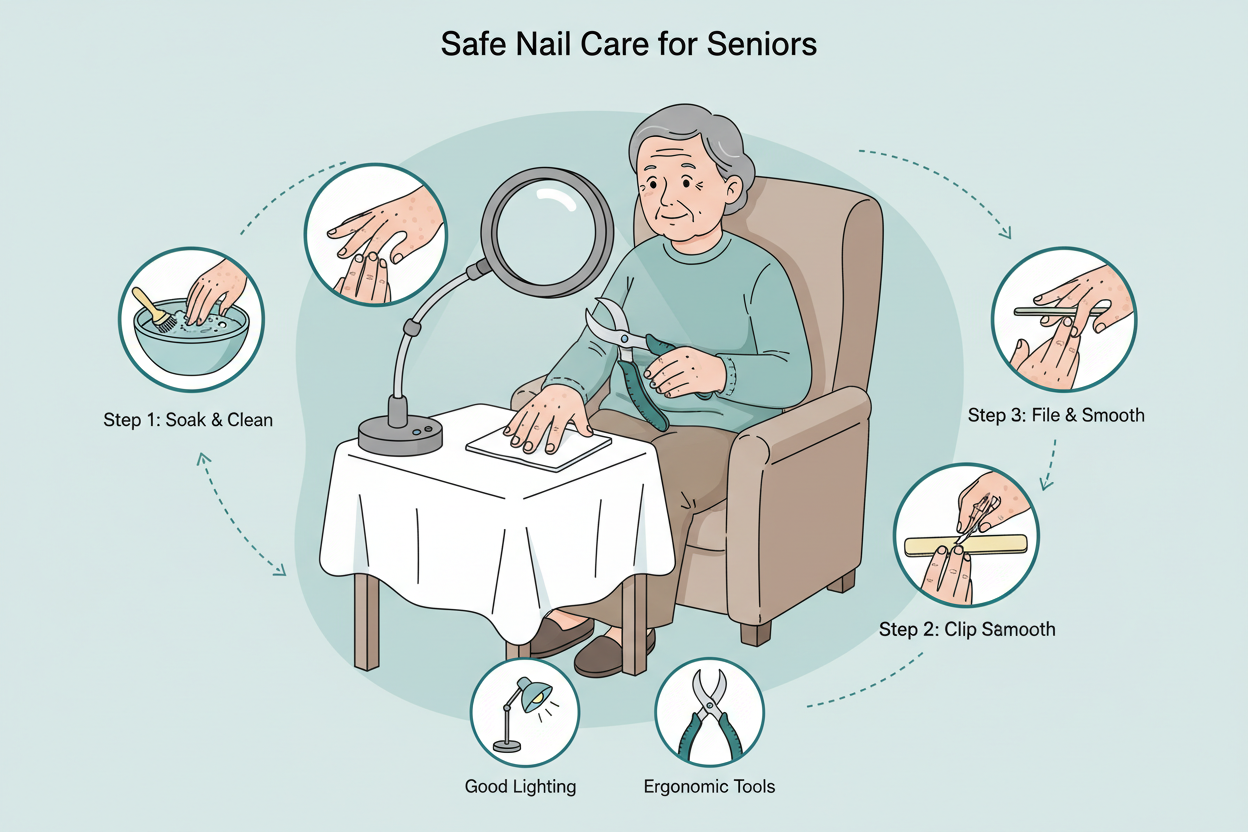
6-Step Safe Toenail Trimming for Seniors (CDC-Aligned)
Every step below follows official CDC foot care guidance to minimize the risk of injury, infection, and ingrown toenails. Take your time — there’s no rush to finish quickly.
-
1
Wash and fully dry your feet first
Clean your feet with warm (not hot) soapy water for 5 minutes to soften thick nails. Then dry completely, especially between your toes, to improve visibility and lower the risk of fungal growth.
-
2
Set up a stable, well-lit space
Sit in a sturdy, non-slip chair with bright overhead lighting (no dim lamps). Use a low footstool to rest your foot at a comfortable height, or a hands-free magnifying mirror to reduce bending and get a clear view of your toes. Never stand on a chair or step stool to reach your feet.
-
3
Trim straight across (NON-NEGOTIABLE)
Never round the corners of your toenails. Cutting straight across is the single most effective way to prevent painful ingrown toenails, which are a top cause of foot infections in seniors. Even if you prefer a rounded look, keep the corners flat and uncurved.
-
4
Do not cut too short
Leave a small white edge (about 1mm) at the tip of the toe. Cutting nails too short raises the risk of pain, bleeding, ingrown nails, and infection. If you can grip the tip of the nail with your fingers, it’s at a safe length.
-
5
File sharp edges smooth
Use an emery board to smooth any jagged or sharp edges after trimming. This prevents the nail from snagging on socks or scratching your skin, which can lead to open sores and infection.
-
6
Do a quick foot health check
After trimming, inspect your feet and nails for redness, swelling, thickening, discoloration, or pain. These are all early signs that you need to see a podiatrist for professional care.

Image Placeholder: 6-Step safe toenail trimming for seniors
What to Do When You Can’t Reach Your Toes
Never force a deep bend or unstable position to reach your toes — this dramatically raises your risk of falls and serious injury. There are 3 safe, easy options to get the care you need without risking your safety:
-
Ask for help from a trusted caregiver or family member
Have someone you trust help with trimming, using the same 6-step CDC guide above. This is the safest option if you have limited mobility or poor vision.
-
Use senior-specific tools for better reach and control
Long-handled nail clippers, magnifying mirrors, and wide-jaw clippers eliminate the need for deep bending and make trimming easier with limited grip strength. Our senior nail clipper collection includes long-handled, ergonomic designs specifically for this need.
-
Schedule professional care with a licensed podiatrist
For safe, stress-free care, visit a board-certified podiatrist. Use the APMA Find a Podiatrist tool to locate a geriatric foot specialist near you. Many local senior centers and Area Agencies on Aging also offer free or low-cost foot care clinics for older adults.

Image Placeholder: ask for help from a family and use professional toenail foot care tool
When to Never Trim Toenails at Home
At-home trimming is not safe for everyone. Skip DIY care and see a podiatrist immediately if you have any of the following:
High-Risk Situations - Do NOT Trim At Home
- Your nails are very thick, deformed, painful, or already ingrown
- You see discoloration, crumbling, nail separation, or foul odor (signs of fungal infection)
- You have redness, swelling, warmth, or drainage around the toe (signs of infection)
- You have diabetes, poor circulation, neuropathy, immune compromise, or open foot wounds
Medicare Coverage Note
The Centers for Medicare & Medicaid Services (CMS) confirms: Medicare does not cover routine nail trimming for healthy seniors, but does cover medically necessary podiatry care for seniors with diabetes, neuropathy, or other qualifying conditions that make at-home care dangerous. Check with your Medicare plan for full details.
Best Nail Clippers for Seniors: What to Look For
Cheap drugstore clippers are not designed for the unique needs of older adults. The best nail clippers for seniors reduce hand strain, improve control, and cut through thick nails without forcing. Look for these non-negotiable features:
-
Wide Jaw Opening (10-15mm)
Fits even the thickest, most deformed toenails without forcing, which prevents nail splitting and cracking.
-
Ergonomic Non-Slip Wide Handle
Easy to grip even with arthritic hands, reduces the grip strength needed for a clean cut.
-
Long-Handled Design
Eliminates the need for deep bending, making trimming safe for those with limited mobility.
-
Surgical-Grade Stainless Steel Blades
Stays sharp for years, resists rust, and cuts cleanly without tearing brittle nails.
-
Spring-Loaded Design
Reduces hand fatigue and the amount of pressure needed to cut, perfect for arthritis and weak grip strength.
DRMODE offers a full range of podiatrist-approved nail clippers designed exclusively for seniors, from long-handled ergonomic tools to complete grooming sets for thick nails. Every tool is tested for ease of use, safety, and long-lasting performance.

Image Placeholder: DRMODE Senior Nail Clipper Product Collection
Find the Perfect Clippers for Your Needs
Stop struggling with cheap, ineffective clippers that put your foot health at risk. Explore our full collection of senior-friendly nail clippers designed for safety, ease of use, and reliable performance.
Shop DRMODE Senior Nail ClippersFrequently Asked Questions
How often should seniors clip their toenails?
Most seniors need toenail trimming every 6–8 weeks, as aging nails grow much slower than younger adults’ nails. If you have thick, fast-growing nails, or fungal changes, you may need trimming every 4 weeks to keep them manageable and prevent overgrowth, which can lead to ingrown nails and pain.
Can seniors with diabetes cut their own toenails?
Only if you meet all of these requirements: full, clear vision, no neuropathy (nerve loss) in your feet, no open wounds or sores, and the ability to safely reach and see your toes without straining.
If you meet these requirements, you must strictly follow the CDC straight-across cutting method and inspect your feet daily for any changes. If any of these requirements are missing, your toenail care must be done by a licensed podiatrist to avoid dangerous complications.
What’s the best clipper for seniors with arthritis?
The best nail clippers for seniors with arthritis are ergonomic, wide-handle, spring-loaded clippers with a long handle design. The spring-loaded mechanism reduces the amount of grip strength needed to cut, while the wide non-slip handle gives you better control even with swollen or painful finger joints.
Long-handled designs also eliminate the need for deep bending, reducing strain on your back and hips while you trim. Explore our arthritis-friendly nail clipper collection for podiatrist-approved options.
What if my toenails are too thick to cut?
If your toenails are too thick for standard clippers, first soak your feet in warm water for 10-15 minutes to soften the nails. Then use a wide-jaw heavy-duty nail clipper designed for thick nails — standard clippers will not have the opening or leverage needed.
If the nails are still too hard to cut safely, do not force it. Schedule an appointment with a podiatrist, who can safely trim thickened nails and address any underlying fungal issues causing the thickening.
Will Medicare pay for podiatrist toenail trimming?
Medicare Part B covers medically necessary podiatry services, including toenail trimming, only if you have a qualifying condition that makes at-home trimming dangerous. Qualifying conditions include diabetes, neuropathy, poor circulation, severe nail deformities, or a history of foot infections.
Medicare does not cover routine, cosmetic toenail trimming for healthy seniors. Always check with your Medicare plan provider to confirm your coverage before your appointment.
Final 30-Second Safety Checklist
Straight Cut
I will trim my toenails straight across, no rounded corners, to prevent ingrown nails.
Stable Setup
I will use a sturdy chair and bright lighting, no standing or unstable positions.
Safe Length
I will leave a small white edge, not cut too short, to avoid pain and infection.
Right Tools
I will use senior-specific, sharp clippers designed for thick nails and easy grip.
Ask For Help
I will ask for help or see a podiatrist if I can’t reach my toes safely.
Health Check
I will see a podiatrist if I notice redness, swelling, thickening, or pain.
Protect Your Foot Health & Independence
Safe toenail care isn’t just about grooming — it’s about maintaining your mobility, comfort, and independence as you age. The right tools make all the difference between a stressful, risky trim and a safe, easy at-home routine.
Explore All Senior-Friendly Nail Clippers
Share:
What Are the Best Toenail Clippers for Thick Toenails in 2026?
What Are the Best Toenail Clippers? A Guide to Quality, Precision, and Foot Health