
- door seodrmode
Nagelriemverzorging: het geheim van een schonere, verzorgdere nagellijn
- door seodrmode
We hebben allemaal wel eens gehoord van nagelriemen—en we kunnen zeker zien wanneer ze droog, overwoekerd zijn of een verse manicure er iets onafgewerkt uit laten zien. Maar welk deel is eigenlijk dode huid, welk deel leeft nog, en waarom lijkt het meteen terug te komen nadat de nagellijn is opgeruimd?
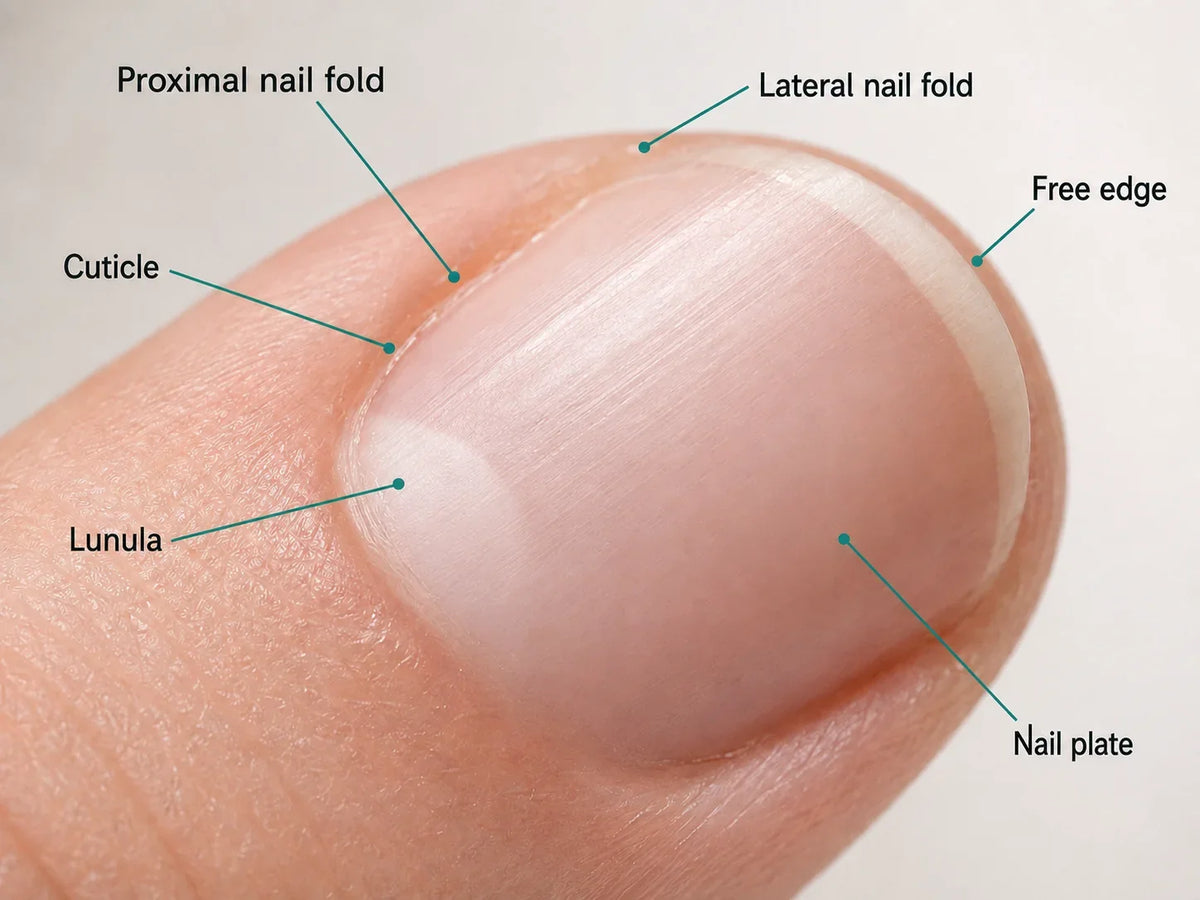
De term "nagelriem" wordt vaak verkeerd gebruikt om de zichtbare huidplooi aan de basis van de nagel te beschrijven. In werkelijkheid is die plooi het eponychium—levend weefsel dat de nagelmatrix tegen infecties beschermt.
De echte nagelriem is de dode, niet-levende huid die van het eponychium loslaat en zich aan de nagelplaat hecht terwijl die groeit. Dit onderscheid begrijpen is cruciaal: je kunt de echte nagelriem veilig exfoliëren, maar het doorknippen van het levende eponychium opent de deur voor ontstekingen en bacteriën.

Constant exposure to water and harsh soaps strips the delicate skin around the nail of its natural protective lipids, leading to severe dehydration and cracking.

Low humidity and biting temperatures draw moisture out of the extremities first. The thin skin of the eponychium is particularly vulnerable to environmental stress.

Nervous habits cause micro-traumas to the living tissue. This physical damage creates rough edges that tempt further picking, creating a relentless cycle of damage.
When the goal is a cleaner-looking manicure, it can be tempting to remove everything visible around the nail base. The problem is that the dead cuticle and living proximal nail fold can appear almost continuous.
For routine at-home care, avoid cutting the attached skin around the entire nail. Removing too much may create a temporarily bare outline, but it can also leave the area red, uneven, or more noticeable as it recovers.
The True Cuticle: The thin layer of dead, transparent skin clinging tightly to the nail plate.
The Eponychium: The thicker, living skin fold surrounding the base of the nail.
Yes, and often with a vengeance if mishandled. Understanding the recovery cycle is key to breaking the habit of destructive trimming.
Cutting the eponychium triggers the body's defensive inflammatory response.
Skin rapidly produces excess keratin to armor the 'wound', creating tough, thick edges.
This hardened new growth peels and creates painful hangnails that tempt further cutting.
Consistent daily oil application softens the hardened skin, slowly returning it to a flexible, healthy state.
Cuticles are easier to refine when the nail line is soft and flexible. Scraping or pushing dry tissue creates more friction and makes it harder to distinguish loose surface buildup from attached skin.
Start with targeted moisture. Apply a small amount around the base and sides of each nail, allow it to sit briefly, and then massage it in.
A pen-style applicator makes this easier because it follows the narrow curve around the nail without coating the entire hand. It can also be kept beside a sink, on a desk, or in a bag for quick application after handwashing.
If you use a cuticle pusher, treat it as an occasional precision tool. The area should already be softened, and any nonliving buildup should move with very little pressure.
If the tissue feels attached, tender, or resistant, leave it alone.
Deze routine in vier stappen combineert dagelijkse hydratatie met af en toe onderhoud—zonder van nagelriemverzorging een langdurige manicure te maken. Gebruik de nagelriemverzorgingspen als frequente onderhoudsstap. Knippen, vijlen, terugduwen en polijsten hoeven alleen te gebeuren wanneer nodig.
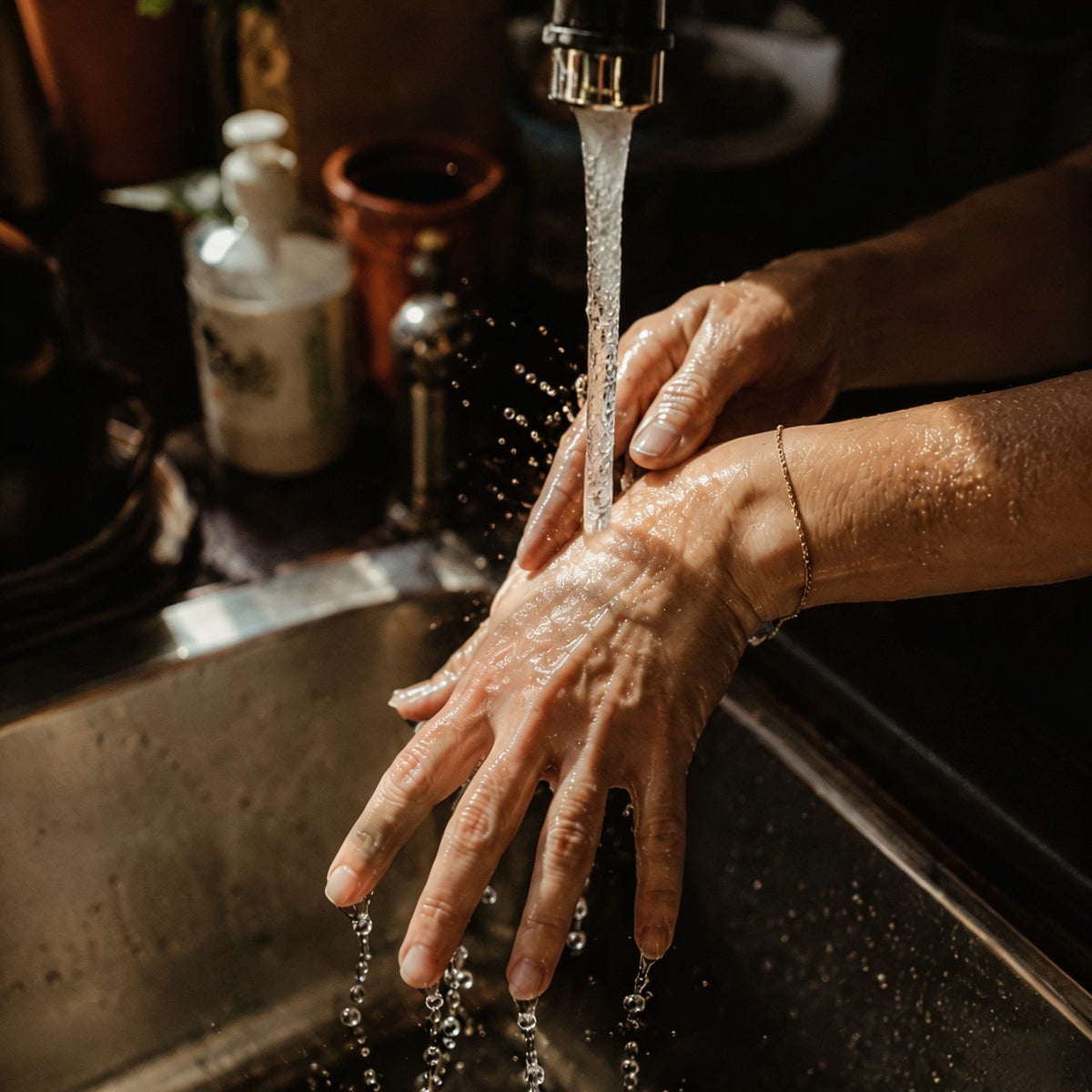
Was met milde zeep en lauwwarm water, droog daarna de handen en nagelplooien grondig. Maak de huid rond de nagels voorzichtig schoon—schraap niet over de omliggende huid en graaf niet onder de vrije rand.

Terwijl de nagellijn na het wassen nog soepel is, houd je het schuine uiteinde van de glazen nagelriemduwer bijna plat tegen de nagelplaat. Gebruik korte, zachte bewegingen om alleen het losgekomen vliesje op de nagel op te tillen.
Deze stap is optioneel. Als het weefsel vastzit, gevoelig is of weerstand biedt—of het gebied gebarsten, gezwollen of geïrriteerd is—laat het dan met rust.
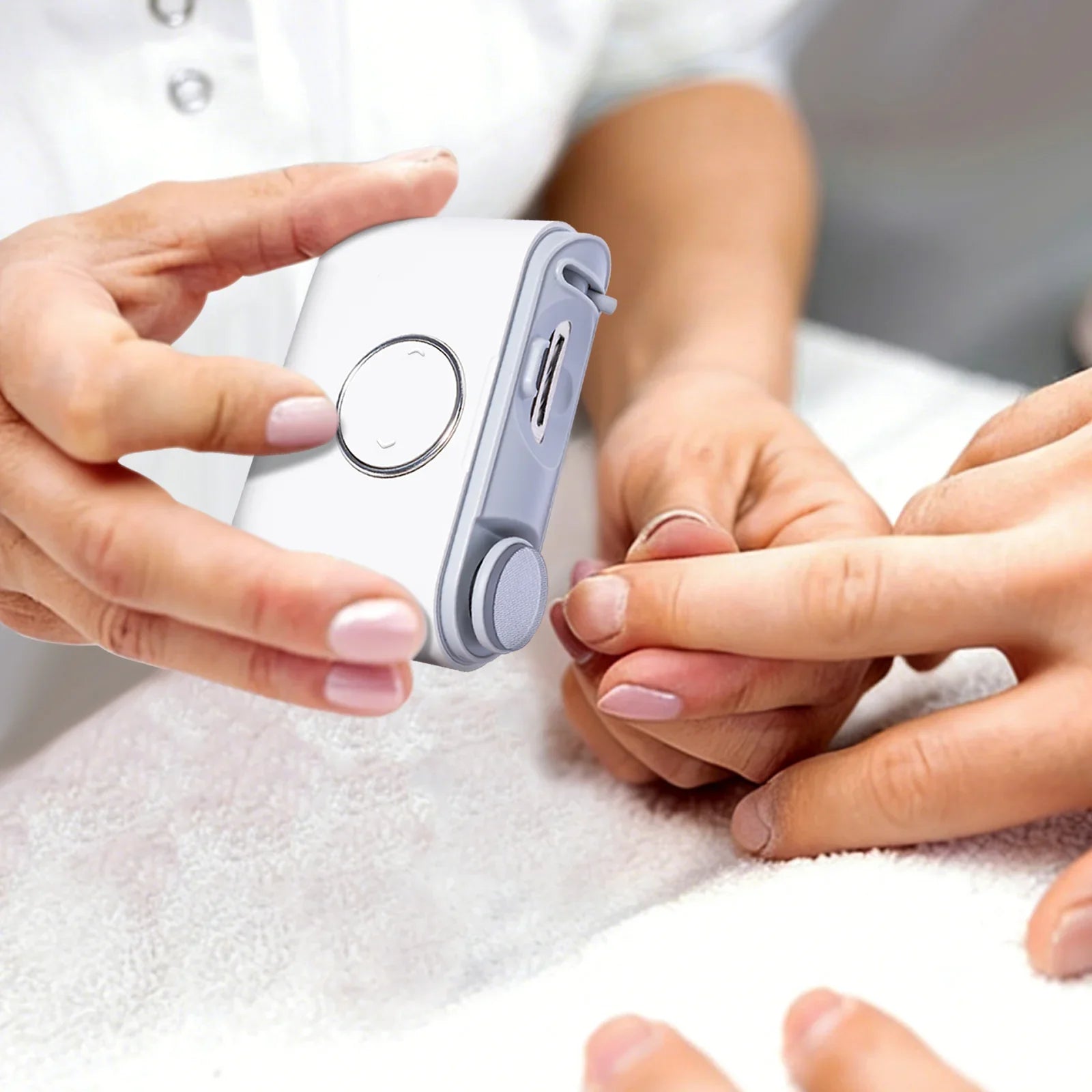
Wanneer de nagels moeten worden ingekort, combineert de DRMODE 3-in-1 Elektrische Nagelknipper knippen, slijpen en polijsten in één apparaat. Een beschermd precisieblad, drie vermogensniveaus en een afgesloten opvangreservoir voor nagelresten maken routineonderhoud gemakkelijker en netter.
Begin met de laagst geschikte stand en geleid alleen de vrije rand in de opening—druk het apparaat nooit tegen de nagelriem of de omliggende huid. Voor kleine vormcorrecties werk je af met een kristalglazen nagelvijl; gebruik de nano-glasglans spaarzaam op gezonde natuurlijke nagels.
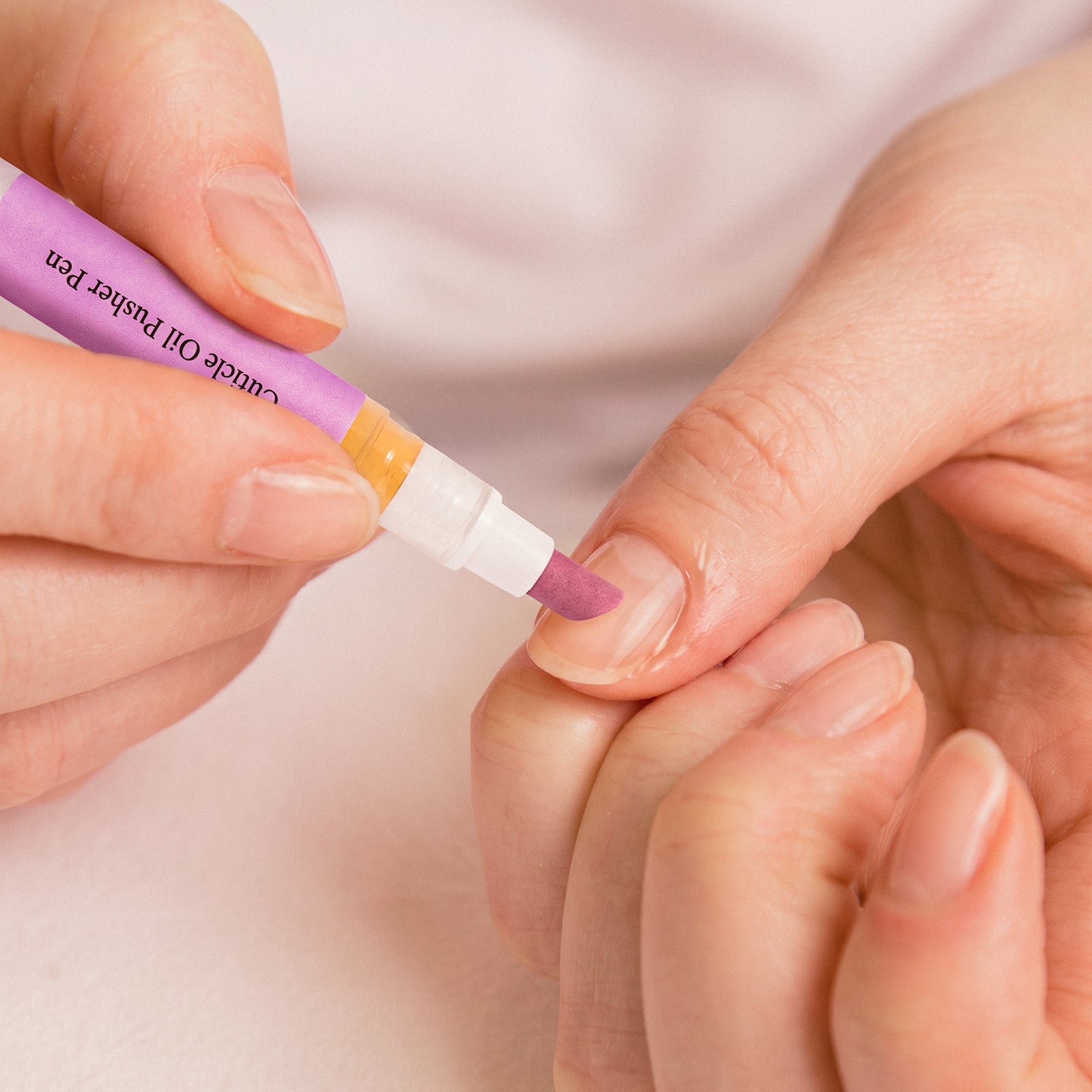
Werk af met een lichte laag van de DRMODE Nagelriemverzorgingspen rond de basis en de zijkanten van elke nagel. De nauwkeurige, schuine punt volgt de smalle nagellijn, terwijl de waterlichte formule gericht vocht toedient zonder de rommel van een traditionele druppelaarolie.
Masseer zachtjes tot het gelijkmatig is verdeeld. Gebruik dagelijks—of wanneer de nagellijn droog of strak aanvoelt—terwijl je vijlen, duwen en glanzen als incidentele stappen blijft doen.
More cutting does not always create a cleaner result. These common mistakes can make the nail line look rougher instead of more polished.
| Mistake | What Happens | Better Approach |
|---|---|---|
| Cutting the full nail line. | Red, uneven regrowth. | Trim only detached hangnails. |
| Pushing dry cuticles. | More friction and irritation. | Soften the area first. |
| Removing every visible edge. | Living skin may be damaged. | Clear only loose nail-plate buildup. |
| Overusing remover. | Dryness or sensitivity. | Follow the stated timing. |
| Overusing tools. | A tender, overworked finish. | Push weekly; shine sparingly. |
| Skipping daily moisture. | Roughness quickly returns. | Apply after washing and before bed. |
Most at-home routines only need a targeted moisturizer, a gentle nail file, and a clean trimmer reserved for detached hangnails. A glass cuticle pusher and nano nail shiner are optional tools for occasional detailing. They should not replace daily moisture or be used aggressively. For a streamlined routine, pair a daily cuticle care pen with the DRMODE 5-Piece Glass Nail File Set.
What looks like fast cuticle growth may be dry surface tissue becoming more visible, irritation from cutting, or the natural cuticle seal forming again. Frequent trimming can make every new edge more noticeable, even if the biological growth rate has not changed.
A leave-on moisturizing product can generally be applied once or several times a day, depending on its directions and your skin’s needs. Useful times include after handwashing, after sanitizer has dried, and before bed.
A cuticle care pen designed for leave-on use can usually be applied every day. For very dry nail edges, use it in the morning and before bed, then reapply after handwashing when the area feels tight. Stop using the product if it causes persistent burning, itching, or a rash.
Cuticle removers soften or loosen keratinized surface tissue so it can be wiped from the nail plate more easily. They are not intended to dissolve living skin. Follow the stated contact time, rinse when directed, and avoid applying remover to cracked or irritated areas.
Pause cutting, scraping, and cuticle remover until the skin has settled. Apply a gentle moisturizer regularly and wear gloves when handling cleaning products or spending long periods in water. If a hangnail is fully detached, clip only the loose section with a clean tool. Do not pull it.
Daily pushing is unnecessary and may create repeated friction around the nail base. If you use a glass cuticle pusher, soften the area first and limit the step to approximately once a week—or only when loosened buildup is visible on the nail plate.
You do not need to cut the cuticle line before polishing. Refining loose surface tissue can create a cleaner outline, but remove any moisturizer from the nail plate before applying polish. Oil or serum left on the nail may affect adhesion.
Contact a healthcare professional if the skin around a nail becomes increasingly red, warm, swollen, painful, or begins producing pus. A nail that lifts, changes shape, develops persistent inflammation, or shows a new unexplained dark streak also requires professional evaluation rather than cosmetic cuticle care.
Polished-looking cuticles do not come from cutting away as much skin as possible. They come from knowing the difference between visible nonliving buildup and the living fold that naturally frames the nail.
Soften first. Refine only what moves without force. Keep rough nail edges smooth, and make targeted moisture part of your daily routine.
The result is not a completely bare nail base, but something more natural and easier to maintain: a clean, comfortable nail line that makes both bare nails and finished manicures look more considered.
This article provides general cosmetic nail-care information and is not a substitute for diagnosis or treatment by a qualified healthcare professional.
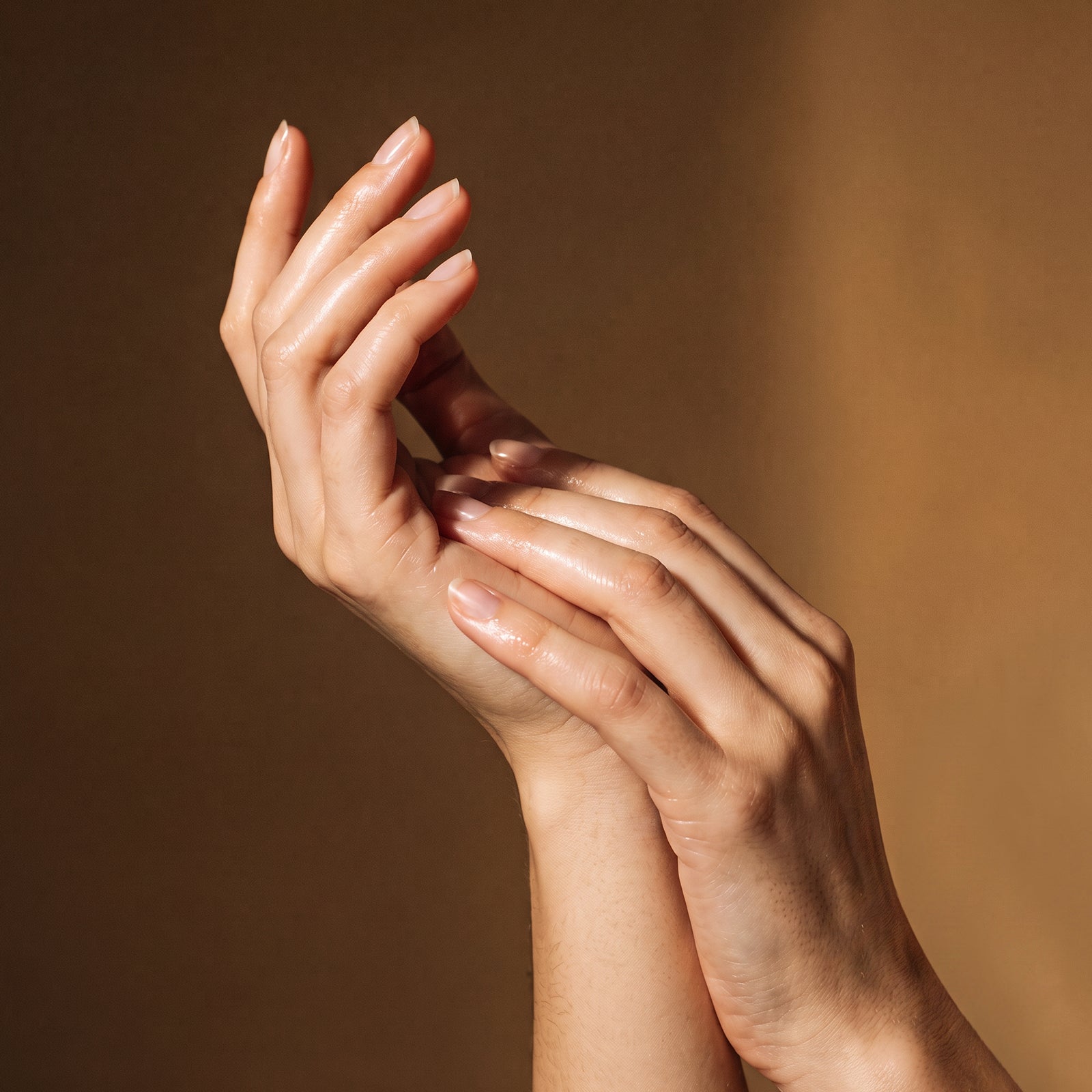
Verfijn ruwe randjes en herstel de natuurlijke glans met de set van 5 glazen nagelvijlen, en verzacht daarna droge nagelriemen met drie waterfijne nagelriemoliepennen. Alles wat je nodig hebt voor natuurlijk verzorgde nagels—zonder een afspraak bij de nagelsalon.

Klaar om toe te voegen

Klaar om toe te voegen

Klaar om toe te voegen
Delen:
Stop de worsteling: Hoe kies je de beste teennagelknippers voor dikke nagels
Nagelknippers thuis schoonmaken: eenvoudige stappen om te desinfecteren