
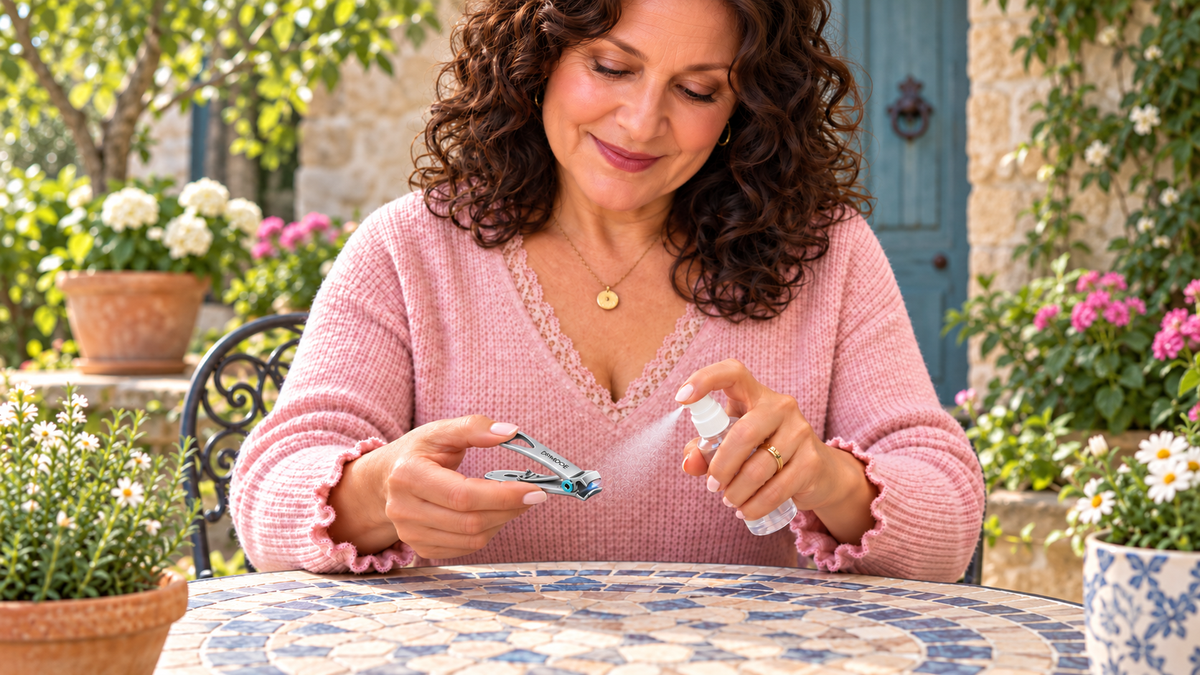
- por seodrmode
Cómo limpiar los cortaúñas en casa: pasos sencillos para desinfectarlos
- por seodrmode
¿Crees que una rápida rociada de alcohol isopropílico es suficiente? Aprender cómo limpiar los cortaúñas empieza con más que un simple espray. Los restos de uñas, las escamas de piel, el aceite y la humedad pueden acumularse alrededor de las cuchillas y la bisagra. Si quedan residuos, los gérmenes pueden permanecer en la herramienta.
En esta guía, aprenderás a limpiar los cortaúñas en casa, cuándo desinfectar los cortaúñas y cómo secarlos y guardarlos correctamente.
Los cortaúñas tocan las placas ungueales, la piel y, a veces, la zona bajo el borde libre de la uña. Los fragmentos pequeños pueden quedar atrapados en los bordes cortantes, la bisagra, el resorte o la zona de la lima.
Compartir cortaúñas sucios puede transferir contaminación entre personas. Si alguien en tu hogar tiene una sospecha de infección fúngica en las uñas, mantén las herramientas de esa persona separadas y límpialas con cuidado después de usarlas.
La limpieza también te ayuda a inspeccionar y mantener la herramienta. Elimina los restos atrapados y comprueba que el mecanismo se mueva con suavidad.
Here’s what these terms mean for your clippers:
For your home routine, start by removing the debris. Then use a disinfectant when needed, let the clipper dry completely, and put it away in a clean case.
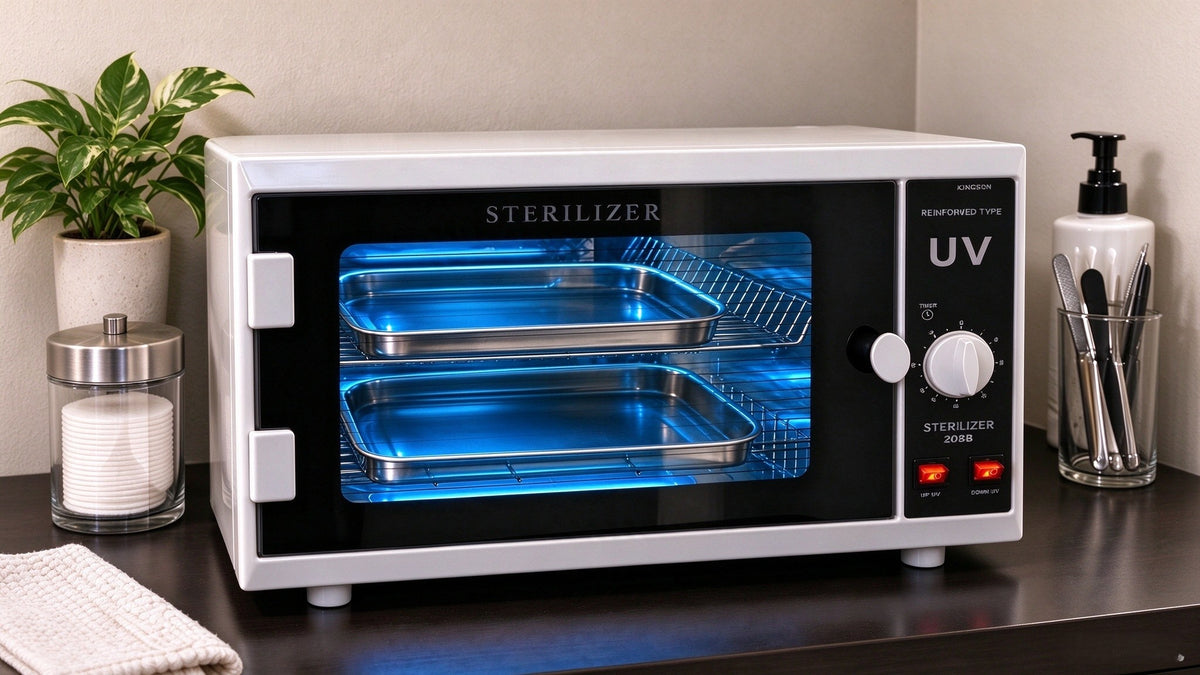
A commercial nail clipper cleaner may be useful, but check whether it is designed to clean, sanitize, or disinfect. Those functions are not interchangeable.
Para un cortaúñas manual con piezas de metal sin recubrimiento, estas son tres opciones a considerar. Consulta primero las instrucciones de cuidado del cortaúñas, especialmente si tiene recubrimiento metálico, recubrimiento de color, agarres de goma o componentes pegados.
| Disinfectant | Key Advantage | Mixing & Contact Time |
|---|---|---|
| 70% Alcohol Isopropyl alcohol |
Generally noncorrosive to metal May affect plastics, rubber, adhesives, and finishes. |
Follow the product label. Choose a product labeled for your intended tool or surface use, and follow its stated contact time. |
| BARBICIDE Original Concentrate |
Anti-rust formula For compatible hard, nonporous tools. |
2 US fl oz concentrate + 32 US fl oz water. 10 minutes of full immersion. Rinse and dry completely afterward. |
| LUCAS-CIDE Pink or blue Concentrate |
pH-neutral formula Made for soaking compatible nail tools. |
½ US fl oz concentrate + 1 US gallon water. 10 minutes of contact. Follow the bottle’s rinsing directions, then dry completely. |
Protege el metal midiendo con precisión, retira la herramienta cuando el tiempo de contacto termine y sécala por completo. No la dejes en remojo durante la noche. La lejía doméstica puede corroer el metal, por lo que no es nuestra primera opción para el cuidado rutinario de los cortaúñas. Nunca mezcles desinfectantes.
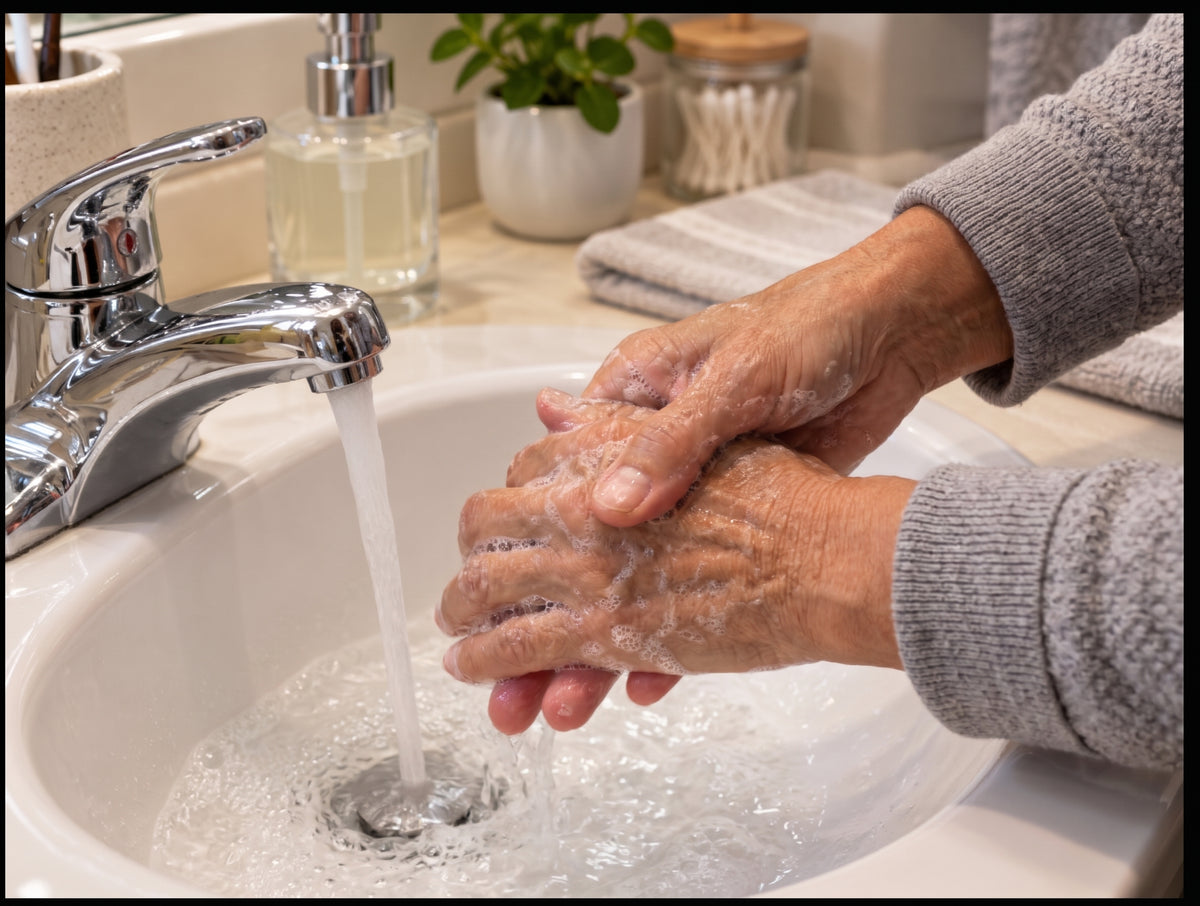
Lávate las manos. Comprueba si hay hojas astilladas, piezas sueltas u óxido profundo; sustituye los cortaúñas dañados.
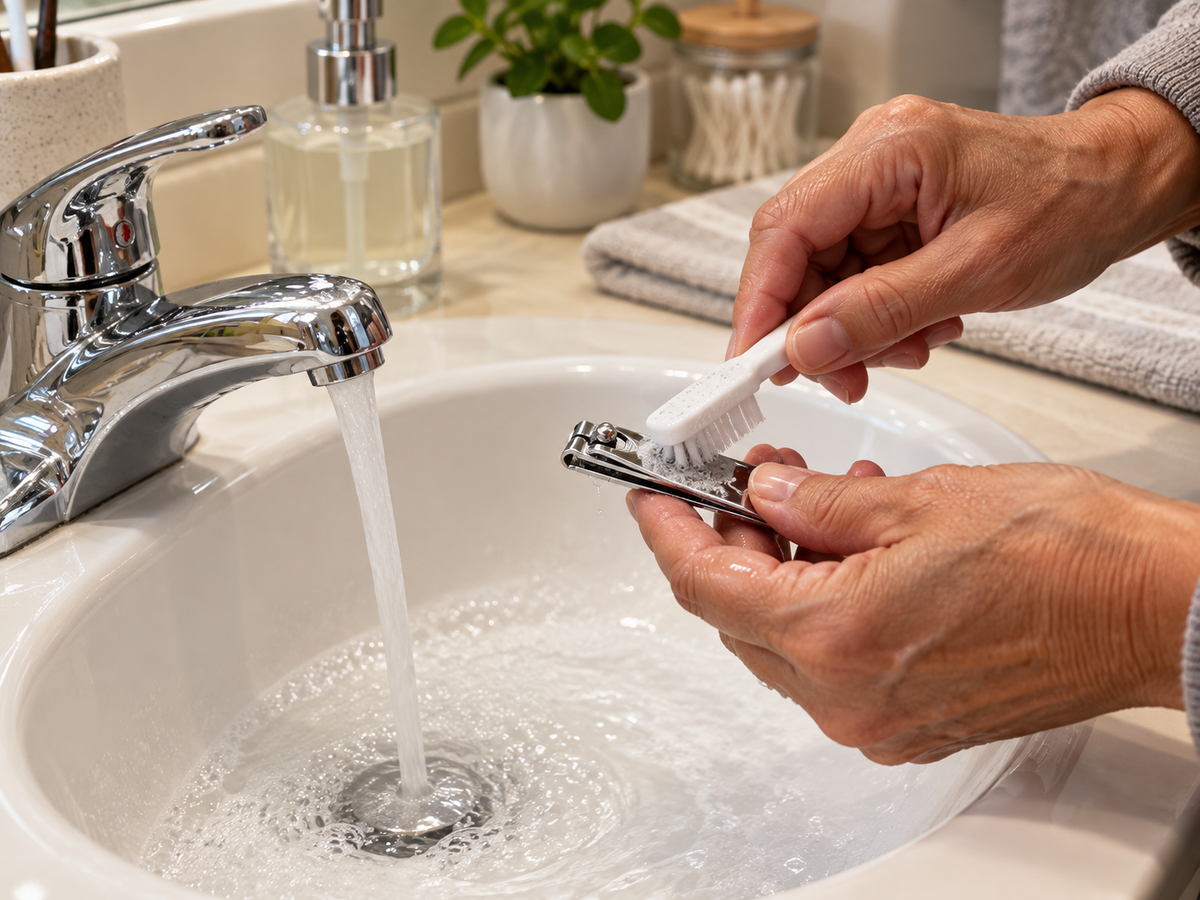
Cepilla para retirar los restos de uñas y las escamas de piel, especialmente alrededor de la bisagra y entre las hojas.
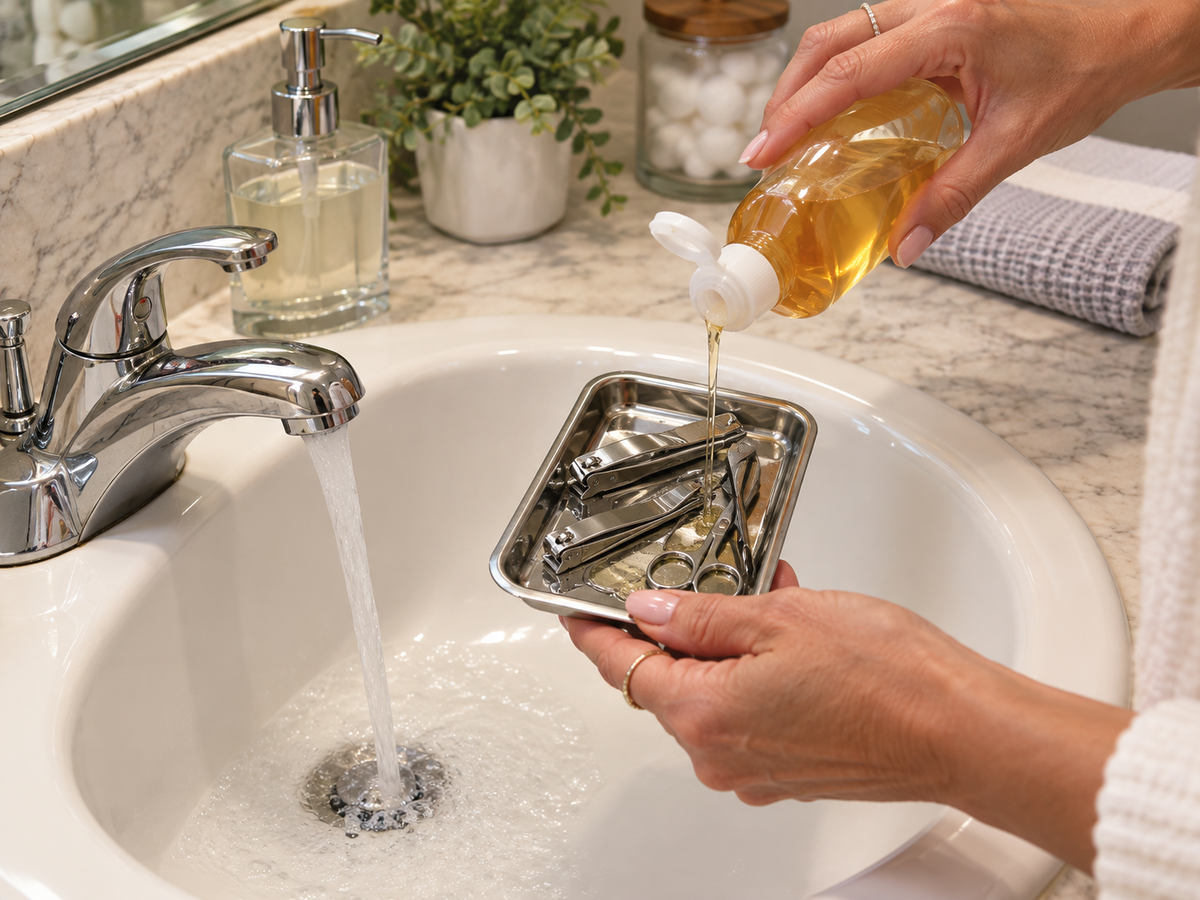
Frota con jabón suave y agua tibia. Enjuaga bien y luego seca como se indica antes de desinfectar.
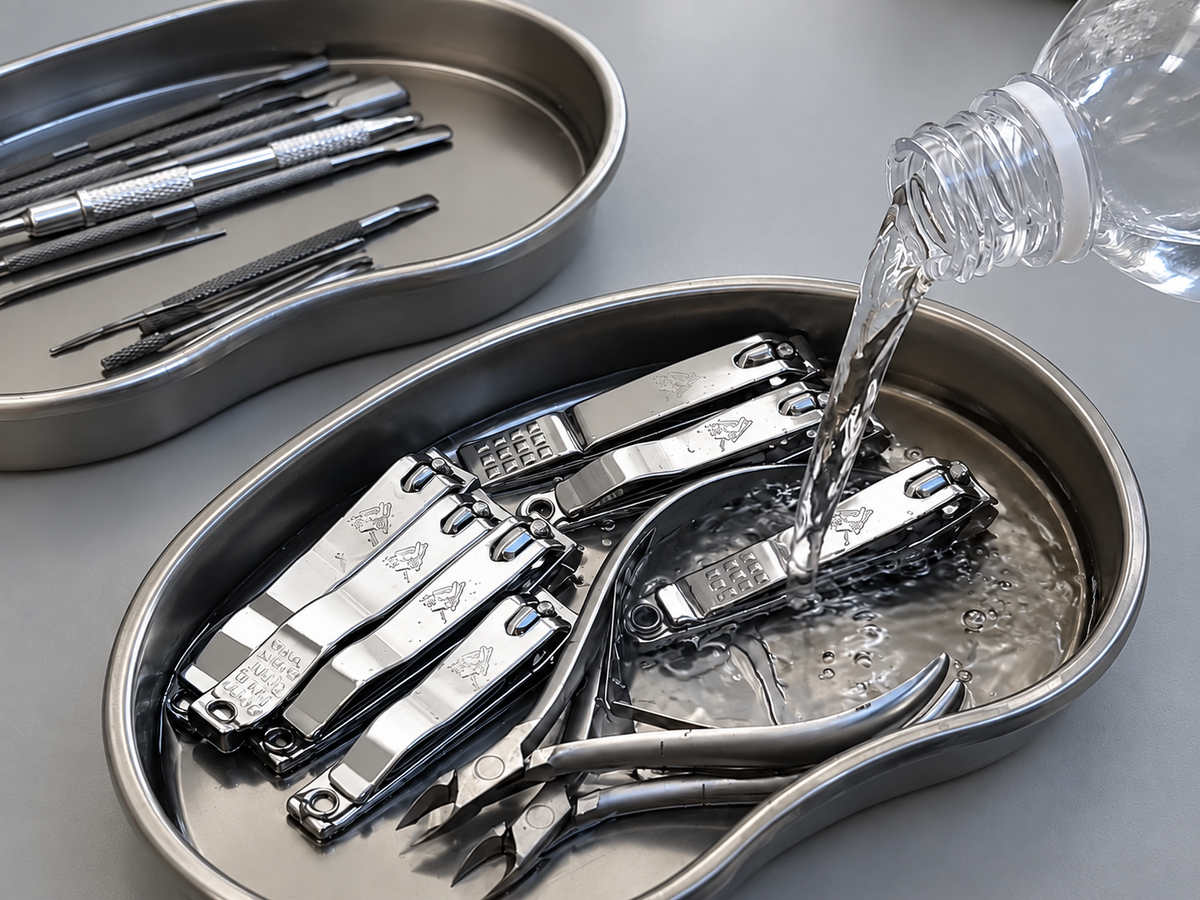
Cepilla para retirar los restos de uñas y las escamas de piel, especialmente alrededor de la bisagra y entre las hojas.
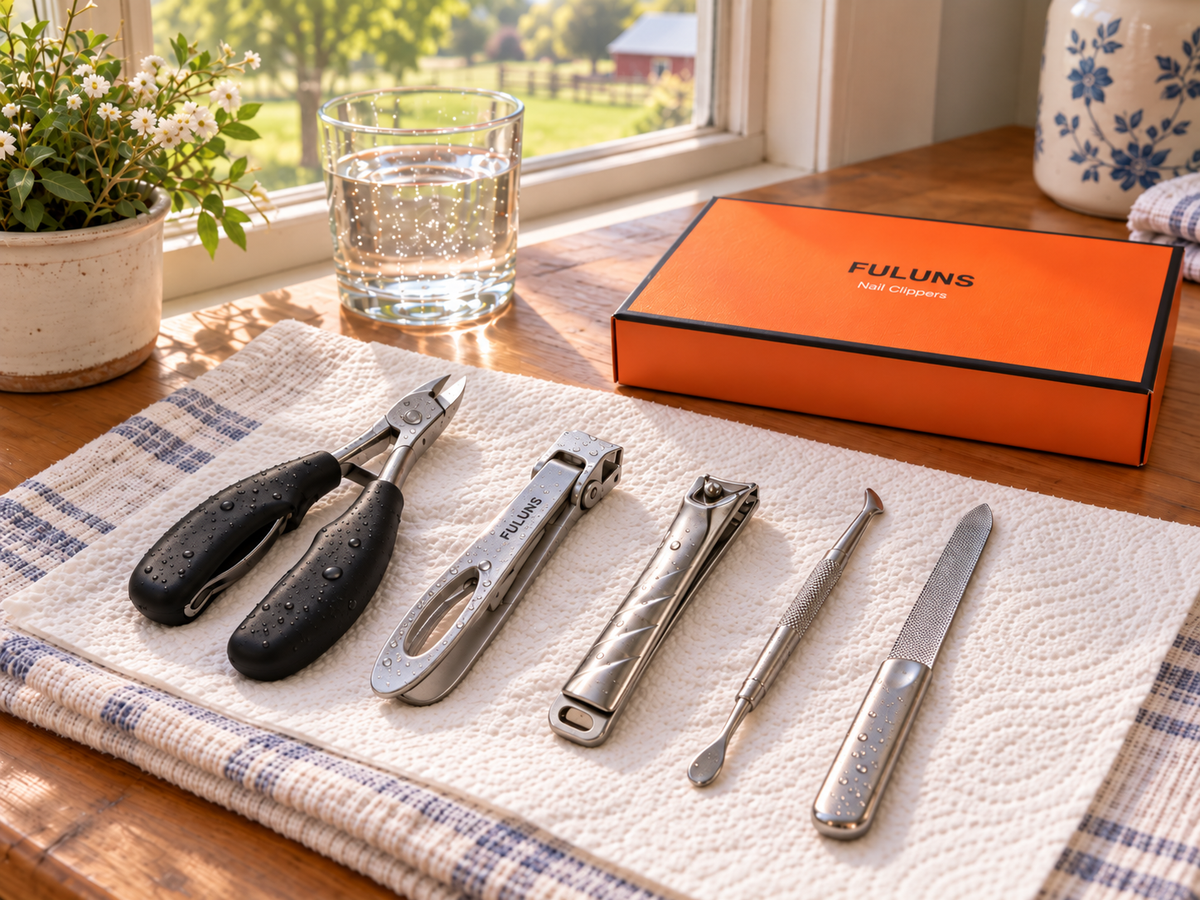
Seca por completo las hojas y la bisagra. Guárdalos en un estuche limpio y seco.
Retira los restos de uñas antes de aplicar un desinfectante compatible con la herramienta durante todo el tiempo de contacto indicado en la etiqueta. Un estudio de 2018 detectó ADN del virus de la hepatitis B (VHB) en tijeras de uñas y en muestras de uñas, lo que refuerza la importancia de una higiene adecuada y de que las herramientas para uñas sean de uso personal.
| Sample / condition | HBV DNA finding | Study context |
|---|---|---|
| Nail scissors | 27%Tested positive | Scissors used by 63 patients with detectable serum HBV DNA. |
| Nail specimens | 50%Tested positive | Nail specimens collected from the same 63 patients. |
| Higher serum HBV DNA | 71.8%Reported probability of tool positivity | When serum HBV DNA was >105 IU/mL, the reported probability of detecting HBV DNA on nail scissors was 71.8% (P < .05). |
Study context: These findings concern HBV DNA detection in a selected patient group. They do not describe all household nail tools; 71.8% is not an infection probability. DNA detection alone does not establish infectivity or transmission.
Source: Koroglu et al. American Journal of Infection Control. 2018;46(7):793–797. Read the study on PubMed. DOI: 10.1016/j.ajic.2017.12.009.
Nuestros DRMODE Mejores Cortaúñas cuentan con acero inoxidable martensítico con un tratamiento superficial cerámico diseñado para ayudar a resistir la corrosión. Una limpieza y desinfección adecuadas ayudan a eliminar residuos y reducir las bacterias en la superficie.

Alcohol has activity against some fungi, but its effectiveness depends on the product and how it is used.
Effectiveness depends on the product’s formulation, intended use, and contact time. Choose a product with the appropriate label claim and follow its directions. A quick spray and immediate wipe is not a reliable substitute.
Boiling may reduce germs, but it cannot reliably guarantee that nail clippers are sterile.
Heat may also damage plastic parts, coatings, or adhesives. For a compatible manual metal clipper, use the cleaning and timed disinfection routine above. True sterilization generally needs professional equipment and a controlled process.
A nail clipper cleaner can remove debris, but it may not disinfect the tool.
Check the product’s label and use a suitable disinfectant when the situation requires it.
LUCAS-CIDE Concentrate is another disinfectant option for compatible nail tools.
Follow the specific product label for dilution, contact time, and aftercare. Use it only with compatible tools.
Dry nail clippers completely and store them in a clean, dry case.
Before putting them away, check the cutting edges and hinge for any remaining debris.